Web3 represents the next evolution of the internet, built on blockchain technology and other advanced systems. Unlike previous generations, Web3 fundamentally changes how we interact with online networks and services by emphasizing data control, privacy, and decentralization.
The Evolution of the Internet
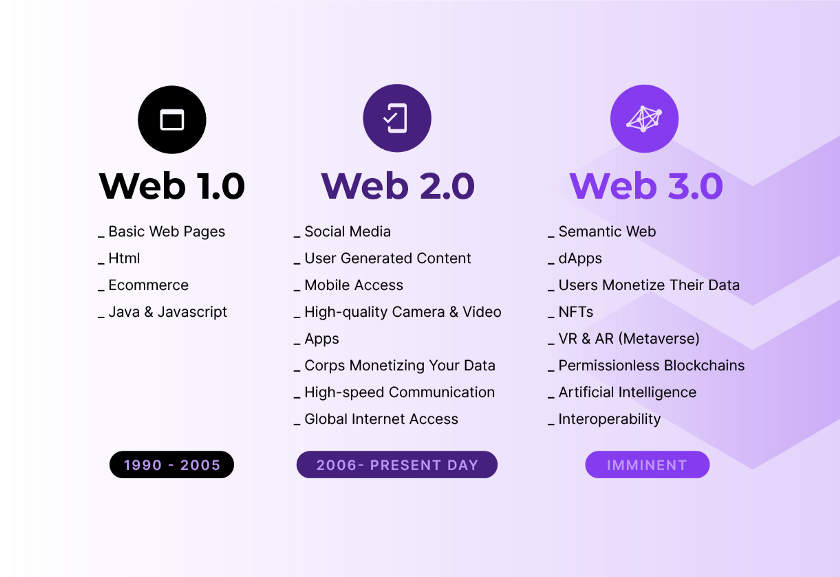
The internet has undergone two major developmental phases: Web 1.0 and Web 2.0. Web 1.0 was the first generation where users were primarily content consumers. Web 2.0, our current internet era, allows users to interact with and create content. Now, we’re entering Web3, a new paradigm with distinct capabilities and features.
What is Web3?
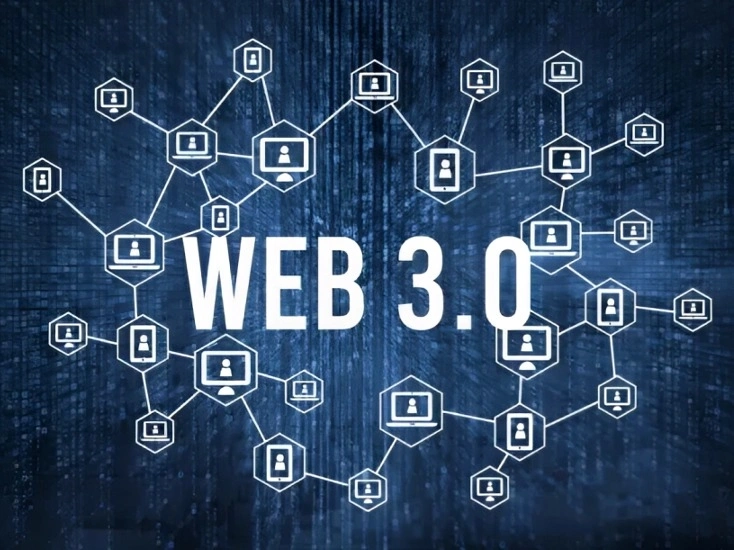
At its core, Web3 is a decentralized internet system built on blockchain technology. Blockchain functions as a distributed ledger stored across numerous computers, making data storage significantly more secure.
Three Key Characteristics of Web3
Decentralization
Decentralization is perhaps the most significant feature of Web3. It means data and applications aren’t controlled by any single individual or organization but instead by the user community.
Real-world applications of this decentralization include:
- Decentralized Applications (dApps): Applications built on blockchain that aren’t controlled by any single entity, enabling users to send money, trade digital assets, and create content.
- Cryptocurrencies and Digital Assets: These allow secure, direct financial transactions without intermediaries like banks. Digital assets such as NFTs can represent real-world items like artwork, real estate, and ownership rights.
- Metaverse: Virtual worlds created through VR and AR technologies for gaming, social interaction, and other activities.
Data Control
In Web2, user data is typically controlled by tech companies that collect, use, and share it for their purposes, raising privacy and security concerns. Web3 uses blockchain to give users control over their own data. Information is stored across distributed networks rather than centralized servers, protecting it from being controlled by any single entity.
Interoperability
Web3 aims to create stronger connections between diverse technologies, allowing data to move between platforms without intermediaries. This interoperability gives data mobility, enabling users to switch seamlessly between services while maintaining their preferences and settings.
Additionally, protocols integrating Internet of Things (IoT) devices extend the web beyond traditional boundaries. For example, cryptocurrency technologies can facilitate borderless transactions, allowing value exchange across geographical and political boundaries.
The Importance of Web3
Web3 is reshaping internet interaction and opening new possibilities for data security by addressing many Web2 problems:
- It reduces dependence on centralized organizations, creating a more evenly distributed power structure
- Blockchain and smart contracts build secure, transparent, and immutable systems, enhancing online transaction trustworthiness
- Users gain control over their personal data and how it’s used
- Digital currencies create new economic models that incentivize user contribution
- Web3 integrates virtual reality and artificial intelligence for more dynamic experiences compared to static Web2 models
Four Critical Technologies Behind Web3
Blockchain
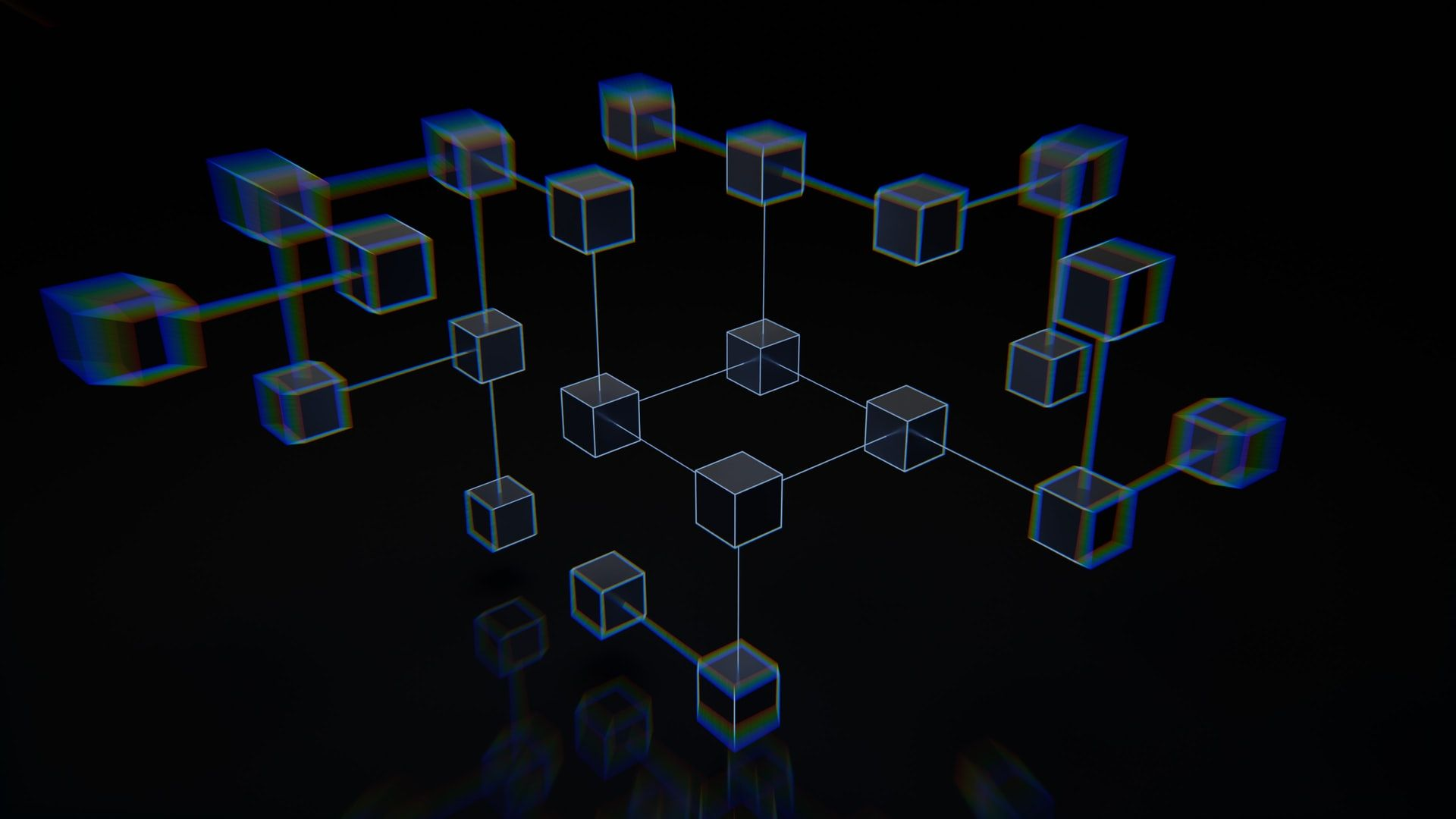
Blockchain technology provides the foundation for many Web3 applications, offering transparency, immutability, and trustlessness. This decentralized, distributed ledger stores transaction records and data across a network of nodes.
The blockchain database organizes data chronologically in blocks, allowing deletion or modification only with peer network consensus. Built-in mechanisms prevent unauthorized transactions and create consistency across shared ledgers, resulting in an immutable record-keeping system for various transaction types.
Tokenization
Tokenization converts real-world or digital assets into digital tokens, cryptographically representing ownership, access rights, or other forms of value.
This technology enables new applications and improves existing ones, such as creating decentralized asset markets, providing fractional access to physical or digital assets, and developing new payment systems.
WebAssembly
WebAssembly (Wasm) is a binary code format designed for web browsers that delivers near-native performance, significantly improving upon traditional web technologies like JavaScript. This provides a platform for decentralized applications to run efficiently across different platforms.
Wasm enhances performance for Web3 applications like dApps and blockchain games and can be used to create new web applications like virtual and augmented reality programs.
Semantic Web Technology
Semantic web technology helps applications better understand and interpret customer data. RDF and OWL are two semantic web languages that help create graph-based data structures and define relationships between entities.
These technologies can improve Web3 applications such as search engines, personalization services, and artificial intelligence applications.
Potential and Challenges of Web3
Potential
- Decentralized Economy: Web3 applications can create decentralized economic systems through tokens, encouraging user contribution and engagement
- Community Building: Web3 can develop strong communities where users have power and participate in platform decision-making and development
Challenges
- Adaptability: Adoption of new technology can be challenging for traditional users, especially when they need to understand concepts like blockchain and tokens
- Scalability: Current blockchain networks can become expensive and computationally demanding as data volumes increase
- Interoperability: Different blockchain networks may have incompatible data formats and protocols
- Governance: Decentralized Web3 systems require effective community governance without power centralization
Overall, Web3 has the potential to positively transform the internet, but challenges must be addressed before widespread implementation.
Popular Web3 Applications
Smart Contracts
Smart contracts are self-executing agreements with pre-encoded rules that automatically implement contract terms when specific conditions are met. For example, contracts can define item ownership and automatically transfer rights upon payment, creating transparency and transaction efficiency.
These contracts can also perform financial functions like mortgages, bonds, and securities, reducing dependency on intermediaries and enhancing transaction security.
InterPlanetary File System (IPFS)
IPFS is a distributed, decentralized file storage system offering efficient content storage and access for Web3. It uses cryptographic hash functions to create unique addresses for each file and peer-to-peer networks for content storage and retrieval.
When users request content from IPFS, the system locates nodes storing that content based on the hash function. It then retrieves content from multiple nodes in parallel, enhancing redundancy and fault tolerance. IPFS eliminates dependence on centralized servers and provides an effective means for content storage and sharing.
Conclusion
Web3 represents a promising, innovative next generation of the internet. Beyond technological advancement, it brings innovation in how we interact online. Key technologies like Blockchain, Tokenization, WebAssembly, and Semantic Web create a decentralized, transparent, and flexible system that could fundamentally transform our digital experiences.