Binance has established itself as a dominant force in the cryptocurrency market. Let’s explore what makes this exchange maintain its leadership position and examine its key features, products, and history.
What is Binance?
Founded in 2017 in Shanghai, China by Changpeng Zhao (CZ), Binance is now headquartered in Malta and ranks as one of the world’s premier cryptocurrency exchanges. Since its launch, Binance has achieved remarkable success, offering over 1,600 trading pairs to meet diverse user needs.
Currently, Binance leads cryptocurrency exchange rankings on CoinMarketCap and stands as the centralized exchange (CEX) with the highest daily trading volume, averaging $12-15 billion per day.
Beyond its main exchange, Binance’s other products have also gained prominence. One notable example is BNB Chain (BNB), a smart contract platform supporting decentralized application (dApp) development. BNB ranks in the top 5 for Total Value Locked (TVL) among Layer 1 and Layer 2 blockchains.
Binance integrates popular payment solutions including Visa, Mastercard, ApplePay, and GooglePay, making cryptocurrency markets more accessible. In Vietnam specifically, Binance supports P2P trading and has integrated with the Momo e-wallet, enabling convenient and rapid conversion between fiat and cryptocurrencies. These efforts have consistently strengthened Binance’s market leadership and attracted users worldwide.
Binance’s History
Binance was established in 2017 in China by Changpeng Zhao. However, following China’s cryptocurrency trading ban in September 2017, Binance relocated its headquarters overseas to maintain operations.
Within just one year, by January 2018, Binance quickly became the world’s largest cryptocurrency exchange with a market capitalization of $1.3 billion, despite fierce competition from Coinbase and other exchanges. That same year, Binance launched Binance Coin (BNB) – its native token used for paying transaction fees on the exchange and across other platforms.
On May 7, 2019, Binance faced a major security breach resulting in the loss of 7,000 Bitcoin, worth approximately $40 million at the time. However, the exchange used its “Secure Asset Fund for Users (SAFU)” to fully compensate affected customers, reinforcing its reputation and user trust.
In subsequent years, Binance continuously expanded its services, including a decentralized exchange (DEX), peer-to-peer lending platform, staking, trading bots, and launchpool. Additionally, Binance executed strategic acquisitions, most notably purchasing CoinMarketCap, the leading cryptocurrency data website.
Today, Binance ranks among the world’s largest and most successful cryptocurrency exchanges. With its massive user base and daily trading volumes reaching tens of billions of dollars, Binance continues to maintain its leadership position while constantly innovating to meet evolving market demands.
Key Features of Binance
- Security and Stability: Binance employs a robust multi-layered architecture. It also maintains the SAFU (Secure Asset Fund for Users) and implements Proof of Reserve protocols.
- Multi-Platform Support: Binance works across various web browsers, Android, iOS, HTML5, WeChat, and many other platforms.
- High Performance: The platform can process 1.4 million buy/sell orders per second.
- Multi-Language Support: Binance supports over 41 languages including Chinese, English, Japanese, Korean, Russian, Spanish, and Vietnamese. Its customer service is available in more than 8 languages, including Vietnamese.
- Fiat Currency Support: Binance lists 51 fiat currencies including USD, GBP, EUR, RUB, CNY, and VND.
- High Liquidity: With daily trading volume exceeding $10 billion (according to CoinMarketCap), Binance offers the highest liquidity in the cryptocurrency market.
- Extensive Cryptocurrency Support: Binance enables trading of numerous cryptocurrencies including Bitcoin (BTC), Ethereum (ETH), Arbitrum (ARB), Optimism (OP), Polygon (MATIC), Binance Coin (BNB), Solana (SOL), and Avalanche (AVAX).
- Strong Development Team: Binance has a development team with extensive experience in finance and cryptocurrency, along with numerous outstanding achievements.
- Diverse Product Range: Binance operates across 30 pre-existing interfaces, supporting all devices and multiple languages for an optimal user experience.
Binance Products
- Spot Trading: This platform supports over 1,000 trading pairs, covering most popular cryptocurrencies including BTC, ETH, BNB, SOL, AVAX, and DOGE. Users experience a matching system capable of processing up to 1.4 million orders per second.
- Margin Trading: Binance’s Margin product allows users to trade with borrowed funds from the exchange. This enables traders to utilize larger capital positions than standard accounts, potentially generating higher profits on successful trades while also increasing risk of liquidation during price drops.
- Futures Trading: Binance Futures allows trading futures contracts with leverage of up to 125x.
- Earn: This product lets users deposit cryptocurrencies like BNB, USDT, FDUSD, and other tokens on Binance to earn interest. Users can choose between flexible or fixed products – flexible allows withdrawal anytime, while fixed offers higher returns.
- Staking: Binance enables staking of cryptocurrencies like USDT, BNB, and ETH to earn additional returns.
- Trading Bots: These automated trading tools developed by Binance execute cryptocurrency buy and sell orders according to investor specifications.
- Binance OTC: A dedicated product serving individual and institutional customers who want to execute large-volume orders.
- Auto-Invest: An automated investment program using dollar-cost averaging strategy launched in 2021. This product currently allows investors to purchase 16 popular cryptocurrencies.
- Loans: Binance’s lending platform.
- Dual Investment: An automated investment tool for two asset types (typically asset-stablecoin pairs) helping users earn additional returns from both assets.
- Binance Launchpool: A platform allowing users to stake cryptocurrencies to receive rewards in tokens from specific projects.
- P2P Trading: This feature enables direct trading between users or with merchants with Binance as intermediary. Launched in Vietnam in January 2020, P2P helps investors trade coins simply and directly using VND. Binance P2P allows traders to acquire BTC, ETH, and USDT with VND directly on the Binance platform, then transfer from P2P to Spot, Margin, or Futures trading without fees or intermediaries.
- Binance NFT Marketplace: A leading global NFT trading platform launched by Binance. The marketplace aims to attract artists, creators, and cryptocurrency enthusiasts worldwide through premier NFT exhibitions and collaborations, with industry-best liquidity and extremely low fees.
- Binance Copy Trading: This feature allows users to replicate portfolios of experienced traders in real-time. After determining their investment amount, Binance automatically copies trading strategies from traders the user follows.
- Binance Megadrop: Binance’s new token issuance platform combining Binance Simple Earn and Binance Wallet, helping users gain early access to airdrops from projects that will be listed on Binance. To participate in Megadrop, users can lock BNB tokens in Binance Simple Earn or complete Web3 Quests on Binance Wallet to earn points.
- Binance Wallet: A self-custody cryptocurrency wallet integrated directly into Binance’s application. The wallet allows users to self-manage their cryptocurrencies, execute token swaps across multiple chains, earn yields, and interact with various blockchain platforms.
- Binance HODLer Airdrops: A token airdrop program for BNB holders, based on BNB balances at snapshot time. When users stake BNB in Simple Earn products on Binance, they automatically qualify for HODLer Airdrops, Launchpool, and Megadrop, with Banana being the first project.
Legal Challenges Faced by Binance
Throughout its development, Binance has encountered numerous legal issues with various governments:
CFTC Lawsuit Against Binance
In March 2023, the U.S. Commodity Futures Trading Commission (CFTC) sued Binance and CEO Changpeng Zhao for allegedly violating derivatives trading regulations. The CFTC complaint included internal Binance messages showing the exchange processed transactions for U.S.-designated terrorist organizations like Hamas and for banned platforms like the Hydra darknet marketplace.
Binance was also accused of not strictly enforcing policies preventing U.S. users from accessing Binance.com, as it couldn’t block VPN usage. The exchange allegedly proactively warned VIP users about potential regulatory actions so they could withdraw assets in advance.
SEC Legal Action Against Binance
In June 2023, Binance and CEO Changpeng Zhao were sued by the U.S. Securities and Exchange Commission (SEC) for alleged securities law violations. The SEC’s allegations included:
- BNB and BUSD being classified as securities
- Binance violating securities regulations by offering BNB and BUSD, and providing Earn and BNB Vault staking services
- BAM Trading (Binance’s U.S. subsidiary) violating securities regulations through staking services
- Binance failing to register as a dealer, clearing agency, and securities broker with the SEC
- Binance.US failing to register as a dealer, clearing agency, and securities broker with the SEC
- CEO Changpeng Zhao violating securities regulations as head of Binance, BAM Trading, and Binance.US
- Binance mixing user funds for trading through Merit Peak and Sigma Chain companies allegedly owned by Zhao without informing customers
European Regulatory Issues
In June 2023, Binance faced legal problems in several European countries including Belgium and France. The Belgian Financial Services and Markets Authority (FMSA) ordered Binance to immediately cease all cryptocurrency trading services. Simultaneously, French authorities investigated the exchange for alleged money laundering and illegal provision of digital asset services.
Binance’s $4.3 Billion Settlement and CZ’s Resignation
In November 2023, Binance agreed to pay a $4.3 billion fine to settle its prolonged legal battle with the U.S. Department of Justice. According to the indictment released by the DOJ, Binance was charged with three offenses:
- Conspiracy to conduct and manage an unregistered money transmission business
- Violation of the Bank Secrecy Act and U.S. federal and international trade regulations
- Violation of U.S. financial sanctions regulations
Simultaneously, founder Changpeng Zhao stepped down as CEO of Binance and pleaded guilty to anti-money laundering requirement violations in a Seattle federal court on November 22 (U.S. time). Following CZ’s resignation announcement, his replacement was revealed as Richard Teng, Binance’s Global Markets Director.
Nigeria’s $10 Billion Compensation Demand
In June 2023, the Nigerian government ordered Binance to cease operations in the country. In July 2023, Nigeria’s SEC issued warnings to citizens about risks of cryptocurrency investment through Binance, as it was an unlicensed and unregulated exchange.
On March 1, 2024, the Nigerian government demanded $10 billion in compensation from Binance for “indirectly” contributing to the devaluation of the national currency Naira through cryptocurrency speculation.
Former Binance CEO CZ’s Prison Sentence
On April 30 (U.S. time), the sentencing hearing for former Binance CEO CZ concluded. For violating anti-money laundering regulations, CZ received a 4-month prison sentence, significantly less than the 36 months previously recommended by U.S. Department of Justice prosecutors.
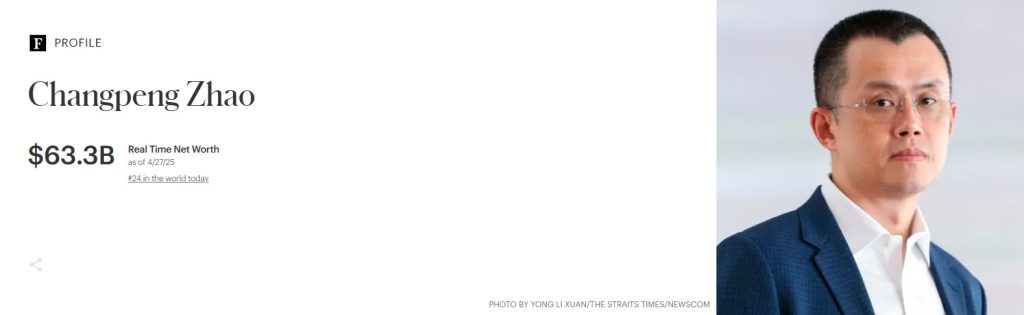
CZ’s lenient sentence was attributed to his not opposing extradition and voluntarily coming to the United States for trial. Additionally, he consistently expressed remorse for his role in Binance’s legal violations throughout the two-hour hearing. When sentenced, CZ leaned forward and nodded slightly whenever the judge pointed out his violations, showing focus and willingness to accept responsibility.
Although no longer with Binance, CZ remains the wealthiest person in cryptocurrency in 2024 with a net worth exceeding $61 billion, ranking 50th on Forbes’ global billionaire list. He is currently developing a new project called Giggle Academy.
Changpeng Zhao completed his prison sentence on September 29, 2024, after serving 4 months for lax management leading to money laundering on the exchange. On August 22, CZ was transferred from FCI Lompoc II to the Long Beach Reintegration Management Facility (RRM), marking the final phase of his sentence in preparation for community reintegration. The cryptocurrency community has high expectations for CZ’s return, calling it a “bullish unlock.”
Community Backlash Over Binance’s Memecoin Listings
In September 2024, Binance announced plans to list three new projects: First Neiro on Ethereum (NEIRO), Turbo (TURBO), and Baby Doge Coin (1MBABYDOGE – a six-digit abbreviated version of the original BabyDoge token). Investors were confused by Binance’s seemingly relaxed standards, as three memecoins – coins created primarily for fun and entertainment – were easily listed despite the exchange’s typically strict listing criteria. Moreover, Neiro Ethereum had already been listed for futures trading as NEIROETH/USDT, but NEIRO for spot trading as NEIRO/USDT was a different token.
Many accounts on X (formerly Twitter) questioned this inconsistent listing of NEIRO tokens. Critics suggested Binance was losing its position as the top exchange and speculated that if former CEO CZ were still in charge, he wouldn’t have allowed such indiscriminate listings as current CEO Richard Teng.
Additionally, the community circulated a screenshot of an explanation from Yi He, Binance Co-Founder. According to the message, Yi He explained that Binance wasn’t intentionally driving the market to promote the memecoin trend, but divided their approach into three main segments:
- Mini Apps games on Telegram allowing players to participate and receive airdrops
- Infrastructure projects without tokens but with investment funds participating in funding rounds and high FDV valuations
- Memecoins popularized by widespread user participation
Binance had initially tested NEIROETH as futures, but the community reported it was a token created and held mostly by whales. Therefore, Binance had to find other tokens with more even distribution and lower FDV (implying NEIRO for spot listing).
After her explanation, Yi He emphasized that Binance would strive to list appropriate tokens to meet user demand. She also reminded users to conduct thorough research before investing in any coin/token. However, this was only a screenshot of a message without official confirmation from Binance.
Details About Binance’s Native Token
Token Name: BNB
Ticker: BNB
Blockchain: BNB Chain
Token Standards: BEP-20, ERC-20
Contract: Ethereum: 0xb8c77482e45f1f44de1745f52c74426c631bdd52
Token Type: Utility, Governance
Total Supply: 153,856,150
Circulating Supply: 153,856,150
What is BNB Used For?
BNB is Binance’s native token. Users can pay transaction fees on Binance with BNB and receive discounts compared to using other assets.
Additionally, BNB serves as the native token for other Binance blockchains such as BNB Smart Chain and opBNB.
How to Register on Binance
Go to binance.com/register
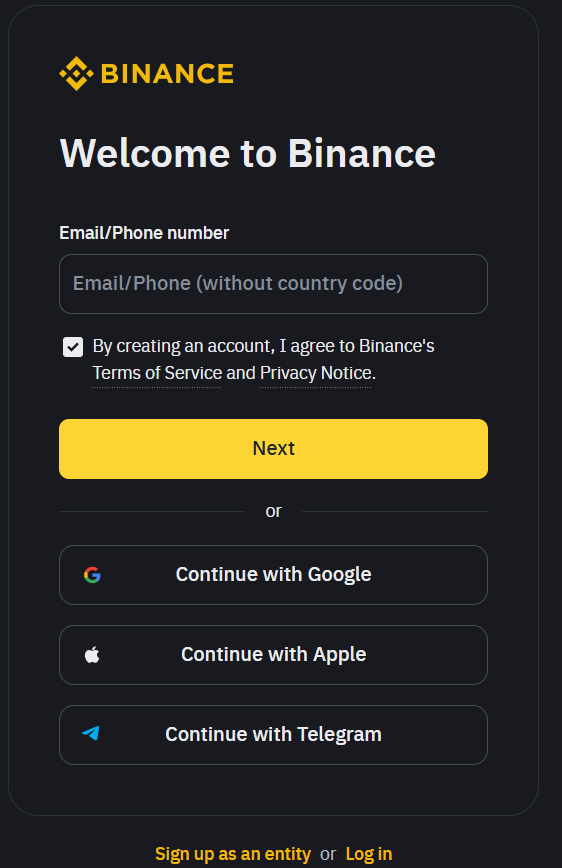
- Select “Register with Email or Phone”
- Enter the Email or Phone number you want to use for registration → Select “Next”
- Enter the verification code → Select “Send”
- Enter your password → Select “Next”
Setting Up 2FA
- Select the account icon in the corner of the screen → Select “Security”
- In the “Authentication App” section → Select “Manage”
- Select “Activate”
- Enter the Email verification code → Select “Send”
- Use “Google Authenticator” or “Twilio Authy” to scan the QR code provided by Binance → Select “Next”
- Enter the 2FA code from the app into the field below → Select “Send” to complete
Account Verification Guide
- Select “Verify”
- Select “Verified”
- Select “Continue”
- Enter personal information (Nationality, Full Name, Date of Birth) → Select “Continue”
- Enter residential address (Full Address, Postal Code, City)
- Choose one of 3 ID types for identity verification (ID Card, Driver’s License, Passport) → Select “Continue” to upload images and complete
How to Use Binance Earn
- Select “Finance” → Select “Earn”
- Choose the token you want to deposit → Select “Subscribe”
- Enter the amount you want to deposit and related information → Select “Confirm”
Frequently Asked Questions
Is Binance trustworthy?
Binance is one of the most reputable exchanges in the crypto market with a 9-point Trust Score on Coingecko’s exchange rating board.
Does Binance have a mobile app?
Yes, Binance’s application is available on both iOS and Android platforms.
What are Binance’s withdrawal limits?
For unverified accounts, the withdrawal limit is 2,000 USDT. For verified accounts, the withdrawal limit is 8 million USDT.
Does Binance require KYC for withdrawals?
When creating a new account, Binance allows unverified accounts to withdraw the equivalent of 2,000 USDT within 24 hours. After 24 hours, users must complete KYC to withdraw funds from their account.
How to contact Binance support when account issues arise?
When experiencing account problems, simply select the icon in the bottom right corner and follow the instructions to get support from the Binance team.
What are Binance’s trading fees?
You can check Binance’s trading fees here: https://www.binance.com/en/fee/trading
Conclusion
Since its launch in 2017 until now, Binance has steadily grown to become a giant in the cryptocurrency market. Through this article, we hope you’ve gained essential information about the Binance exchange.