Lenovo is making a bold move into the world of artificial intelligence with an innovative project: the creation of a smart robotic dog designed to protect historical sites. By blending AI, advanced sensing technologies, and autonomous robotics, Lenovo is not only expanding its product ecosystem but also demonstrating a powerful new application of AI in cultural preservation—a significant and ambitious step in the tech giant’s evolution.
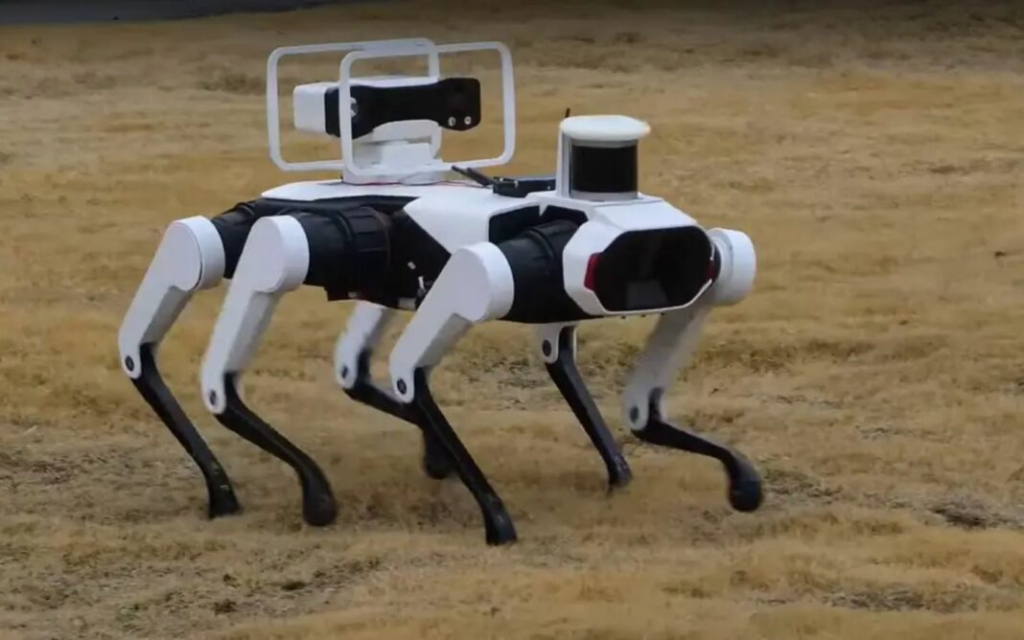
Daystar Bot GS: Redefining Heritage Conservation with AI Robotics
Lenovo’s new Daystar Bot GS is far more than a routine patrol robot. It represents a leap forward in cultural heritage technology, equipped with a sophisticated 3D vision system and cutting-edge cognitive algorithms. This AI-powered machine can capture intricate architectural details with millimeter-level precision—without making any physical contact—ensuring complete safety for delicate structures.
Thanks to real-time environmental awareness and intelligent decision-making, the Daystar Bot GS easily navigates complex terrains, overcoming the challenges posed by ancient sites. In its first deployment phase, the robot successfully scanned and digitally reconstructed the ornate ceilings of the historic Fogong Temple, providing a solid foundation for future structural assessments and conservation efforts.
Built with an IP66-rated dust- and water-resistant design and enhanced by an optimized autonomous control system, the Daystar Bot GS is positioned to become a critical tool in the global movement to digitize and safeguard cultural heritage. Lenovo envisions this breakthrough as a major step toward integrating AI more deeply into practical, real-world preservation projects.
Six-Legged Innovation at the Ancient Fogong Temple
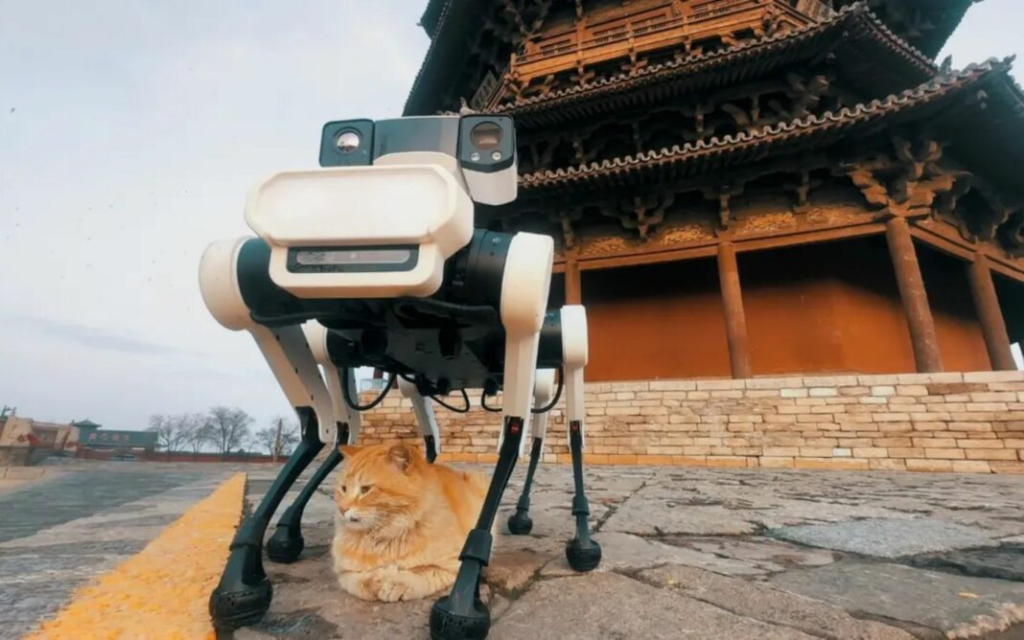
In a landmark initiative merging technological innovation with heritage conservation, Lenovo—best known for its laptops and tech devices—has officially deployed its six-legged robot dog at one of China’s most treasured historic landmarks: the Fogong Temple in Shanxi Province. Constructed in 1056 during the Liao dynasty, the temple is the world’s oldest and tallest wooden pagoda still standing, recognized as a UNESCO World Heritage Site.
This project is part of the AI Smart Pagoda 2.0 initiative, a collaboration between Lenovo and the Tsinghua University–Palace Museum Joint Research Center for Cultural Heritage Conservation. Thanks to its unique six-legged design, the Daystar Bot GS offers superior mobility and stability compared to traditional four-legged robots, making it ideal for navigating the complex environment of ancient wooden structures. The robot’s tasks include intelligent 3D scanning, digital modeling, and routine safety inspections—all aimed at preserving the iconic nine-story, 67-meter-tall pagoda for generations to come.
Conclusion
By developing and deploying the Daystar Bot GS, Lenovo has officially made its ambitious entrance into the AI field, pushing beyond its traditional tech offerings. This innovative robot dog not only showcases the potential of AI-driven robotics but also highlights how emerging technologies can play a critical role in preserving the world’s cultural treasures. Lenovo’s efforts point to a future where AI and heritage conservation work hand in hand to protect human history.