Bitcoin, launched in 2009, is the pioneering cryptocurrency that laid the foundation for today’s thriving crypto market. With its market capitalization exceeding $1.8 trillion, Bitcoin has demonstrated remarkable growth since its inception. Let’s explore what makes Bitcoin special and understand its key aspects.
What is Bitcoin (BTC)?
Created in 2009, Bitcoin is a cryptocurrency designed to function as a payment method independent of traditional institutions. This allows financial transactions to occur directly without third-party intervention.
Bitcoin has a maximum supply of 21 million coins, projected to be fully mined by 2140.
On March 2, 2025, President Trump confirmed the establishment of a national reserve fund including digital assets such as BTC, ETH, XRP, SOL, and ADA. This represents a significant milestone in Bitcoin’s development and evolution.
Who Created Bitcoin?
Bitcoin’s creator is the mysterious Satoshi Nakamoto. In 2008, he published the Bitcoin whitepaper, a detailed document outlining this cryptocurrency. One year later, the first Bitcoin software version was released to the public.
Although claiming to be a 37-year-old Japanese man, Satoshi’s fluent English and the complex technical features in the Bitcoin software raised doubts about his true identity. Around mid-2010, Satoshi unexpectedly left the project, transferring primary development authority to Gavin Andresen.
In October 2024, the HBO documentary “Money Electric: The Bitcoin Mystery” claimed Peter Todd was Satoshi Nakamoto. However, the film quickly received strong backlash from the community, and Peter Todd himself denied being Bitcoin’s founder. The true identity of Satoshi Nakamoto remains unsolved.
Satoshi is estimated to own nearly 1 million Bitcoin, equivalent to over $90 billion at the market price as of March 6, 2025.
Who Controls Bitcoin?
After Satoshi Nakamoto’s departure, Gavin Andresen played a crucial role in maintaining Bitcoin’s development. He wanted Bitcoin to operate independently even without his involvement.
What makes Bitcoin different is its decentralized nature. No entity—whether government, bank, or corporation—can control Bitcoin. All transactions are recorded publicly on the blockchain, ensuring transparency and security. In essence, Bitcoin gives users complete control over their assets.
Who Was the First to Receive Bitcoin from Satoshi?
Hal Finney, one of the earliest participants in the Bitcoin network who helped Satoshi by reporting bugs, made history when he received 10 BTC from Satoshi Nakamoto.
This transaction not only marked Bitcoin’s first on-chain transaction but also made Hal Finney the first recipient of what would later become known as an “airdrop” in the crypto market.
How Does Bitcoin Work?
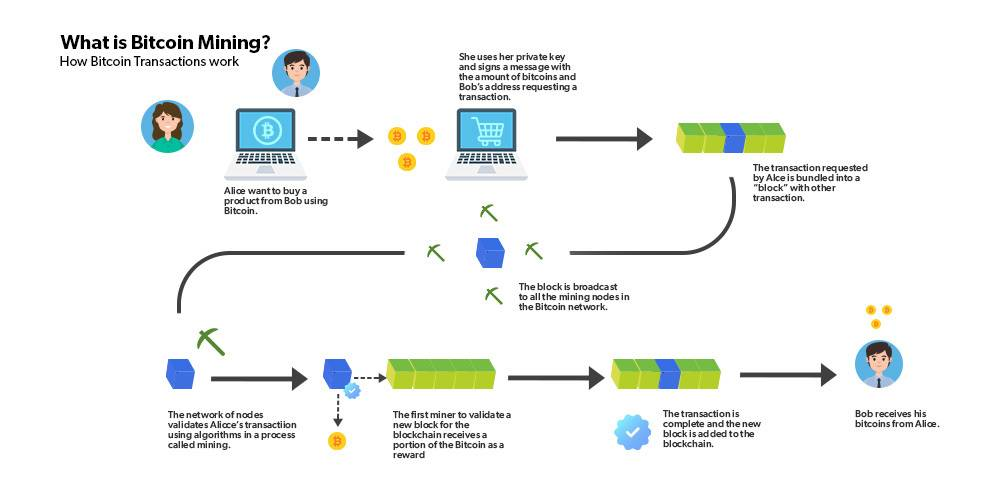
When new transactions appear on the blockchain, they are collected in a temporary area called the ‘mempool’. Miners play an essential role in verifying the validity of these transactions and then organizing them into blocks.
Each block resembles a page in the blockchain ledger, recording multiple transactions along with additional information. Specifically, mining nodes gather unconfirmed transactions from the mempool and create a potential block.
Finally, miners must transform this potential block into a valid block by solving a complex mathematical problem requiring significant computational power. In return, they receive a block reward, including newly created Bitcoin and transaction fees.
Bitcoin’s Development Timeline
1976
Diffi-Hellman Day – November 1, 1976 Whitfield Diffie and Martin E. Hellman created a groundbreaking encryption protocol in their paper “New Directions in Cryptography.” This work established the foundation for modern cryptography, emphasizing secure digital communication and paving the way for public and private key systems essential in today’s cryptocurrency transactions.
1989
DigiCash Founded Cryptographer David Chaum established DigiCash, an early attempt to create a fully anonymous and secure digital payment system based on Blind Signature Technology. This technology enabled secure and private transactions without requiring a trusted third party. DigiCash served as a precursor to modern cryptocurrencies like Bitcoin.
2008
Bitcoin.org Domain Registration – August 18, 2008 The domain “Bitcoin.org” was registered through privacy protection services, keeping the registrant’s identity unknown. Today, the website is managed by an open-source community, including developers, volunteers, and contributors to Bitcoin Core software and related projects.
Bitcoin Whitepaper Released – October 31, 2008 Satoshi Nakamoto published the Bitcoin Whitepaper, titled “Bitcoin: A Peer-to-Peer Electronic Cash System,” describing a decentralized digital currency system for peer-to-peer transactions using blockchain technology.

2009
First Bitcoin Block Mined – January 3, 2009 Satoshi Nakamoto mined the first Bitcoin block, known as the “Genesis Block” (Block 0 or Block 1). This block contained a message in the coinbase parameter: “The Times 03/Jan/2009 Chancellor on brink of second bailout for banks.” This message emphasized Bitcoin’s goal of providing an alternative to centralized financial institutions. The block contained the first 50 mined Bitcoins, marking the beginning of a new era in peer-to-peer, decentralized transactions.

Just days after the Bitcoin network launched, Satoshi Nakamoto sent 10 Bitcoin to Hal Finney, demonstrating that Bitcoin would soon be used as currency.
2010
Bitcoin Pizza Day – May 22, 2010 The first commercial Bitcoin transaction occurred when Laszlo Hanyecz paid 10,000 Bitcoin for two Papa John’s pizzas in Jacksonville, Florida.
Mt. Gox Founded – July 18, 2010 On July 18, 2010, programmer Jed McCaleb established Mt.Gox, initially a trading platform for virtual cards in the game Magic: The Gathering, before converting it into the first Bitcoin exchange.
Mt. Gox facilitated the exchange of fiat currency and Bitcoin, serving as one of the first Bitcoin exchanges and reflecting growing interest in cryptocurrency.
2011
Silk Road Launched – February 2011 Silk Road, a secretive online black market, operated for two years before being shut down by the federal government in 2013. Despite its illegal operations, Silk Road played an undeniable role in promoting Bitcoin as a medium of exchange.
Mt. Gox First Hack – June 20, 2011 On June 20, 2011, Mt. Gox, then the world’s largest Bitcoin exchange, suffered its first major hack. This foreshadowed a series of issues that eventually led to the exchange’s collapse.
2012
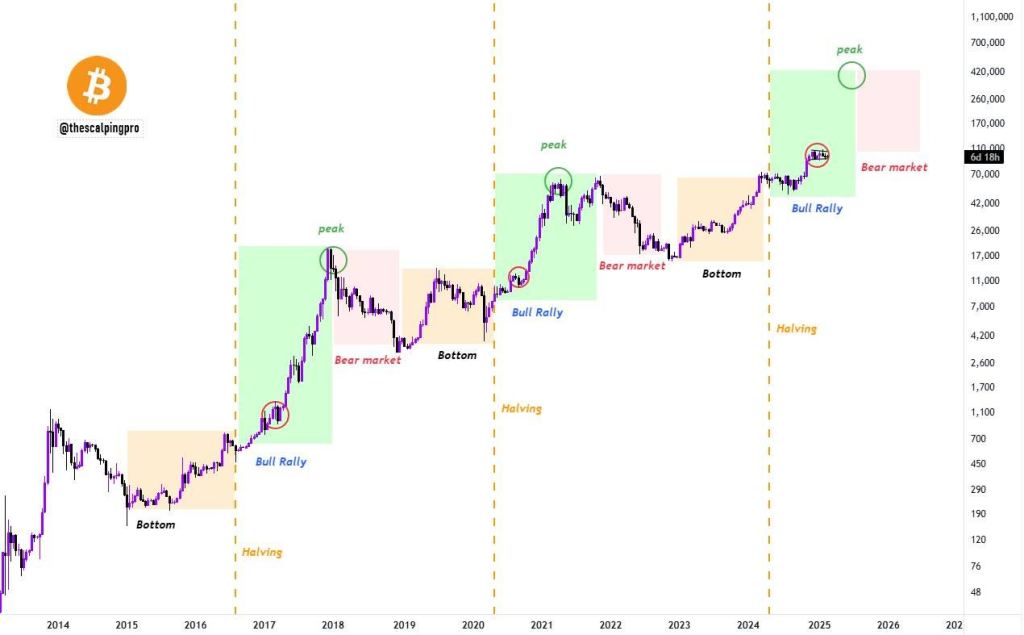
First Bitcoin Halving – November 28, 2012 The first Bitcoin Halving event occurred. In this initial halving, the block reward decreased from 50 Bitcoin to 25 Bitcoin.
2013
First Bitcoin ATM – May 2, 2013 The first Bitcoin ATM was installed in Vancouver, Canada in October 2013, marking the beginning of a global trend. Bitcoin ATMs were designed to provide users with a convenient and quick way to participate in the cryptocurrency market using cash.
HODL Day – December 18, 2013 HODL Day originated from a post on Bitcointalk.org titled ‘I AM HODLING’, where a user explained their intention to hold onto their Bitcoin despite falling prices. ‘HODL’ has since become a popular term referring to holding cryptocurrency despite short-term price fluctuations.
On HODL Day, the cryptocurrency community reaffirms their commitment to holding digital assets and encourages others to do the same, expressing support for the cryptocurrency space and its long-term potential.
2014
Mt. Gox Second Hack and Bankruptcy – February 25, 2014 Mt. Gox, the largest Bitcoin exchange based in Tokyo, declared bankruptcy after a cyberattack resulted in the loss of 850,000 Bitcoin, equivalent to approximately $450 million at that time.
2015
Liquid Launch – October 12, 2015 On October 12, 2015, Liquid, created by Blockstream, launched as a Bitcoin sidechain aimed at addressing Bitcoin’s limitations. It functions as a separate blockchain, offering faster, more efficient asset transfers between exchanges and institutions. Liquid allows users to lock Bitcoin on the main chain and issue Liquid Bitcoin (L-BTC).
2016
Lightning Network Whitepaper Released – January 14, 2016 Joseph Poon and Thaddeus Dryja released the Lightning Network whitepaper, proposing an off-chain protocol for faster and more scalable transactions on the Bitcoin blockchain. This protocol was proposed to address Bitcoin’s scalability issues through off-chain transactions and multi-signature payment channels.
2017
Bitcoin Cash Hard Fork – August 1, 2017 To address Bitcoin’s slow transaction speeds and high fees, a group of miners and developers decided to implement a hard fork, creating Bitcoin Cash (BCH).
2021
Stacks Launched – January 2021 Stacks, a Bitcoin layer co-founded by Muneeb Ali and Ryan Shea, introduced smart contracts for Bitcoin. The protocol uses the Clarity programming language and Proof-of-Transfer (PoX) consensus mechanism to enable smart contract execution on the Bitcoin blockchain.
Bitcoin Reaches $1 Trillion Market Cap – January 19, 2021 Bitcoin’s price reached $54,000, pushing the cryptocurrency to a $1 trillion market capitalization after 13 years since its creation.
Bitcoin Becomes Legal Tender in El Salvador – September 7, 2021 On September 7, 2021, El Salvador became the first country to recognize Bitcoin as legal tender alongside the USD. President Nayib Bukele’s goal was to enhance financial inclusion, attract investment, and reduce remittance costs. Bitcoin is now accepted by various businesses in El Salvador.
2023
Ordinals Protocol Launched – January 21, 2023 Developer Casey Rodarmor introduced the Ordinals protocol on Bitcoin. Ordinals gained widespread attention with the introduction of inscriptions, allowing users to attach content and data to satoshis and write directly to the Bitcoin blockchain through transactions.
BRC-20 Standard Launch – March 8, 2023 A Twitter user with the username @Domo introduced the experimental token standard called “BRC-20”. The creation of BRC-20 generated additional applications for the Bitcoin blockchain.
2024
SEC Approves Bitcoin Spot ETF – January 11, 2024 A Bitcoin ETF (or Bitcoin exchange-traded fund) is a group of Bitcoin-related assets that companies buy, sell, securitize, or trade on traditional exchanges instead of cryptocurrency exchanges.
On January 11, 2024, the U.S. Securities and Exchange Commission (SEC) officially approved Bitcoin spot ETFs. Besides the United States, Bitcoin spot ETFs can also be traded in other countries.
Mt. Gox Begins Creditor Repayments – July 5, 2024 Ten years after the attack, Mt. Gox’s trustee finally made the first payments to creditors in July 2024.
The remaining debt is expected to be paid by October 31, 2025.
2025
President Donald Trump Signs Order to Establish National Reserve Fund for BTC – March 2, 2025 On the evening of March 2, 2025, U.S. President Donald Trump announced he had issued an executive order on digital assets, directing his advisory team to quickly establish a national crypto reserve fund for assets including BTC, ETH, XRP, SOL, and ADA.
Bitcoin’s Key Characteristics
Decentralization
Bitcoin was designed by Satoshi Nakamoto to be a decentralized financial system, eliminating intermediary institutions. Notably, everyone has the right to participate in transaction verification and network security. As a result, Bitcoin can continue operating even when parts of the system experience issues.
Anonymity
Unlike traditional banking systems where customer personal information is collected and stored in detail, Bitcoin provides a strong security layer. When using Bitcoin, user identities are protected, ensuring privacy.
Transparency
Bitcoin offers a certain degree of anonymity, but it’s not absolute. Since all transactions are recorded on the blockchain, wallet balance information can be exposed if wallet addresses are made public. However, tracing a user’s identity from a Bitcoin address is very difficult. To protect privacy, users can use highly secure wallets or apply simpler methods like using multiple wallet addresses and distributing assets.
Non-Repudiation
Once you’ve sent Bitcoin, there’s no way to retrieve it unless the recipient agrees to return it to you. This serves as proof of payment, meaning anyone you’re transacting with cannot deceive you by claiming they haven’t received the money.
Bitcoin Measurement Units
The smallest unit of Bitcoin is the satoshi. This unit is named after Bitcoin’s creator – Satoshi Nakamoto.
1 BTC = 100.000.000.000 satoshi
How to Mine Bitcoin
Mining is the process of validating transactions and creating new blocks on the blockchain. Mining is performed by applications running on computers or specialized mining machines called ASICs.
Hash is a complex mathematical puzzle that serves as the focus of mining programs. Mining rigs attempt to solve hashes as quickly as possible. The difficulty of the hash changes based on the number of miners on the Bitcoin network—more miners means proportionally increased hash difficulty. After a block is mined, the same process repeats for subsequent blocks.
Since its launch, Bitcoin has grown substantially and is considered a symbol of the crypto market. Meanwhile, hash difficulty has increased to tens of trillions.
The increasing difficulty of Bitcoin mining requires mining companies to equip themselves with more powerful mining rigs and consume more electricity.
Steps to mine Bitcoin:
- Build a mining rig (a specialized computer designed for cryptocurrency mining)
- Set up a Bitcoin wallet to store BTC after mining
- After installing mining software, join a Mining Pool (a group of miners combining their computational power to increase chances of finding blocks and earning rewards)
- Begin mining Bitcoin
What Can You Buy With Bitcoin?
In 2009, when Bitcoin was first introduced, we couldn’t use it for anything. But now, you can buy almost everything with it. For example, major companies like Microsoft and Dell accept BTC payments for many of their products and digital content.
Other options include booking hotel rooms or making purchases, paying restaurant and bar bills, dating, buying gift cards, placing bets at casinos, or making charitable donations. There are also various online markets trading everything from prohibited chemicals to high-end luxury items.
Bitcoin remains a relatively complex and novel form of payment, so spending with this currency is somewhat limited. However, an increasing number of businesses, from small coffee shops to large industries, are accepting BTC payments.
Additionally, due to constantly fluctuating exchange rates, Bitcoin has become one of the most lucrative investment choices.
How to Buy Bitcoin
With the strong development of the crypto market, trading Bitcoin has become easier than ever with options ranging from exchanges to P2P markets. You can pay using various methods such as cash, bank transfers, or exchanging from other cryptocurrencies.
Reputable cryptocurrency exchanges that allow Bitcoin trading include: Coinbase, Binance, OKX, Bybit, Kucoin, and more.
Benefits of Bitcoin
Freedom
Bitcoin was designed with freedom in mind. Most importantly, it offers independence from third-party control in transactions. When purchasing items, cryptocurrency has become as convenient as fiat currency in recent years. Especially if you’re buying from certain deep web markets, BTC is an ideal payment form compared to other currencies.
High Convenience
One characteristic of money is convenience, meaning it must be easy to carry and use. Since Bitcoin is entirely digital, all funds are kept in an application or hardware wallet.
Cryptocurrency allows people to freely send and receive money simply by scanning a QR code or through a few steps accessing an online wallet. It takes minimal time, transaction fees are not high, and money moves directly from one person to another without any cumbersome intermediaries. All you need is an internet connection.
Ability to Choose Transaction Fees
An undeniable benefit in the Bitcoin network is the freedom to choose transaction fees. Transaction fees go to miners, only after new blocks are formed. Typically, the sender pays all fees; deducting fees from the recipient may be considered an incomplete transaction.
Transaction fees are entirely voluntary and serve as an incentive for miners to continue working. This mechanism is also the main source of income in the cryptocurrency mining industry, bringing them more money than traditional industries. Bitcoin mining activities will stop at some point in the future when all Bitcoin has been mined.
Therefore, the cryptocurrency market offers a trade-off between cost and transaction waiting time. Higher transaction fees mean faster transaction times, while some users may wait to save money.
Not in PCI
PCI stands for Payment Card Industry. Products in this industry include ATMs, debit cards, credit cards, POS networks, and related services. It encompasses all organizations that store and issue payment data cards. Currently, there are strict security regulations, and most payment card companies participate.
While unified regulations may be good for large companies, the system doesn’t consider individual needs specifically. When using Bitcoin, you don’t need to follow PCI standards.
Security and Control
Bitcoin users can control their transactions; no one can withdraw money from your account without authorization. Additionally, personal information and identity are protected and not disclosed through the transaction process.
Bitcoin Cannot Be Counterfeited
One of the most common ways to counterfeit in the digital world is to use a currency twice, making both transactions fraudulent. This phenomenon is called “double spending.” To solve this problem, Bitcoin uses Blockchain technology along with various consensus mechanisms to build a complete protocol.
Risks of Investing in Bitcoin
Legal Risk
The lack of unified regulations in cryptocurrency management raises questions about their longevity, liquidity, and popularity.
Security Risk
Buying Bitcoin on exchanges like Binance or OKX is common but carries the risk of attacks leading to asset loss. Similarly, storing Bitcoin in non-custodial wallets, where private keys function as passwords, also presents the risk of asset loss if keys are lost or exposed.
Market Risk
Bitcoin is a highly volatile asset, which is considered one of the risk factors that can cause serious damage to investors’ assets.
Is Bitcoin an Economic Bubble?
Nobel Prize-winning economist Robert Shiller proposed a list of criteria for identifying a typical economic bubble. This list includes: Strong price increases of the asset, public excitement, media coverage, and success stories circulating in public opinion. Bitcoin has exhibited all these signs.
Therefore, in some respects, Bitcoin can be viewed as a bubble, and it has burst before. After the notorious closure of Mt. Gox, an exchange handling over 70% of global Bitcoin trading volume, BTC prices declined continuously for a year and a half. It took exactly 3 years for the market to begin recovering. And of course, it’s difficult to predict what will continue to happen in the future.
Differences Between Bitcoin and Traditional Currencies
Decentralization
Every currency in the world is governed by some form of power. All transactions must go through banks, where fees are sometimes unreasonable, and transaction times between parties are extended.
Bitcoin, on the contrary, is not controlled by any party; it’s a decentralized network designed based on cooperation and consensus of participants. Therefore, even when part of the network is down, transactions are still recorded.
Cannot Be Counterfeited
Bitcoin is designed against counterfeiting. The legitimacy of a Bitcoin is guaranteed by blockchain technology, as well as various protection mechanisms established in the protocol.
Most traditional currencies can be forged. However, controlling individuals and organizations do little to completely prevent this issue.
Durability
Bitcoin doesn’t exist in a specific physical form, meaning it cannot be destroyed. Each Bitcoin is essentially permanent, unlike paper money or coins.
“When the pen falls, the chicken dies”
If someone makes a mistake and sends money to the wrong wallet, they can only pray. Like many other Bitcoin features, the irreversible nature was created to prevent fraud. Unfortunately, if it were fiat currency, all you would need to do is pick up the phone to complain.
Convertibility
While some fiat currencies like dollars and euros are widely accepted globally, most national currencies can only be used within their geographical boundaries. In contrast, BTC is an online currency, meaning its operating environment is global.
New Token Standards Implemented on Bitcoin
BRC-20
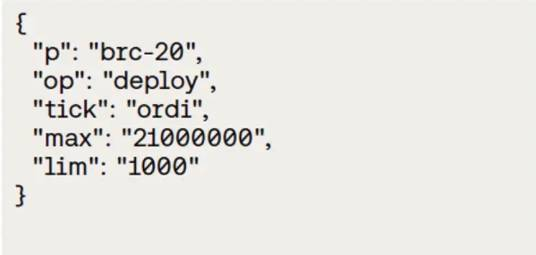
BRC-20 is an experimental token created through the Ordinals protocol by writing data in text form directly onto the Bitcoin network. BRC-20 tokens essentially lack the ability to interact with smart contracts and have few features, but with developer participation, BRC-20 now has more applications than when it first launched.
ORC-20
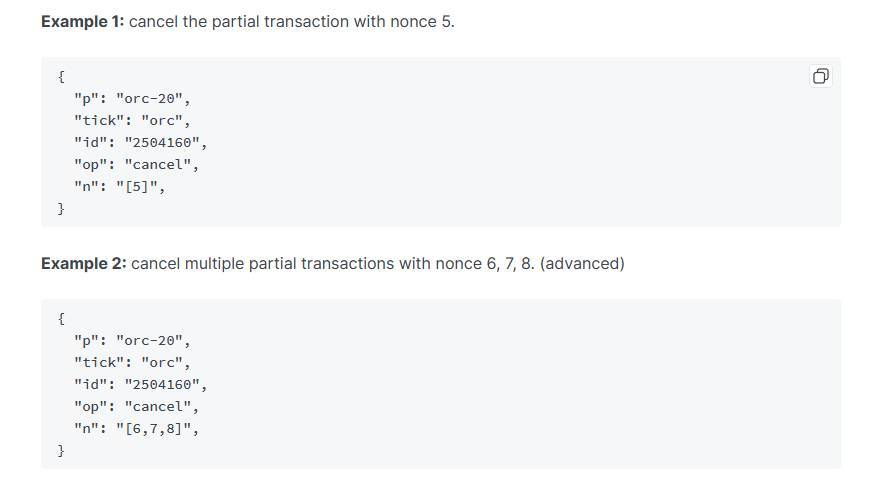
ORC-20 is an open standard for ordinals tokens on the Bitcoin network designed to improve some limitations and establish new features for BRC-20.
ORC-20 operates with backward compatibility with BRC-20 to improve adaptability, scalability, security, and eliminate the possibility of double-spending.
SRC-20
SRC-20 is a token standard developed from specifications for Bitcoin Stamps – digital artwork launched in March 2023 stored on the blockchain.
Bitcoin Stamps convert images to text, add “Stamp:” before the text, and encode it as a Base64 file. It then sends the encoded file to the Bitcoin network for validation and recompilation back to the original.
Runes
Runes is a new standard for issuing fungible tokens on the Bitcoin network created by Casey Rodarmor – the founder of the famous Ordinals protocol.
The biggest difference between the Runes Protocol and other fungible token issuance protocols on the Bitcoin network is that it uses the UTXO model. Balance information is stored directly in the OP_RETURN field of the UTXO instead of witness data like BRC-20 or some other protocols.
Smart Contracts on Bitcoin
Recently, there have been efforts from various developers such as RGB Protocol and Spiderchain to launch smart contracts on Bitcoin.
RGB Protocol
RGB is a collection of open-source protocols enabling smart contracts on Bitcoin. Smart contracts are executed and validated off-chain, allowing participants to benefit from Bitcoin’s consensus layer security while improving flexibility and scalability.
Simply put, RGB is a system allowing users to check smart contracts, execute and verify them individually at any time without paying extra fees because it doesn’t use the blockchain like “traditional” systems such as Ethereum. Complex smart contract systems like Ethereum require users to spend a significant amount of gas for each operation.
Spiderchain
Spiderchain is a sidechain anchored to the Bitcoin network, supporting EVM compatibility to deploy Ethereum applications. The idea of developing Spiderchain was built by Bontanix Labs, a team aiming to connect their Ethereum layer-2 solution, Bontanix EVM, to Bitcoin.
How is Bitcoin Taxed?
Whether Bitcoin is taxed depends on the legal framework for cryptocurrency in each country. Vietnam is a country without a complete legal framework for crypto, so trading this type of asset is not yet taxed.
However, in developed countries like the United States, Bitcoin transactions are taxed. The tax calculation method for Bitcoin is similar to other capital assets such as stocks, bonds, and precious metals. Long-term capital gains when investing in Bitcoin are taxed as ordinary income and assessed at the same tax rate as the taxpayer’s wages or salaries. Long-term capital gains are usually taxed at more favorable rates, depending on the taxpayer’s tax status and income.
What is Bitcoin Halving?
After every 210,000 blocks are mined, or approximately once every four years, the block reward given to Bitcoin miners for processing transactions is cut in half. This event is known as halving because it reduces by half the rate at which new bitcoin is released into circulation. This is how Bitcoin reduces inflation until all bitcoin is released.
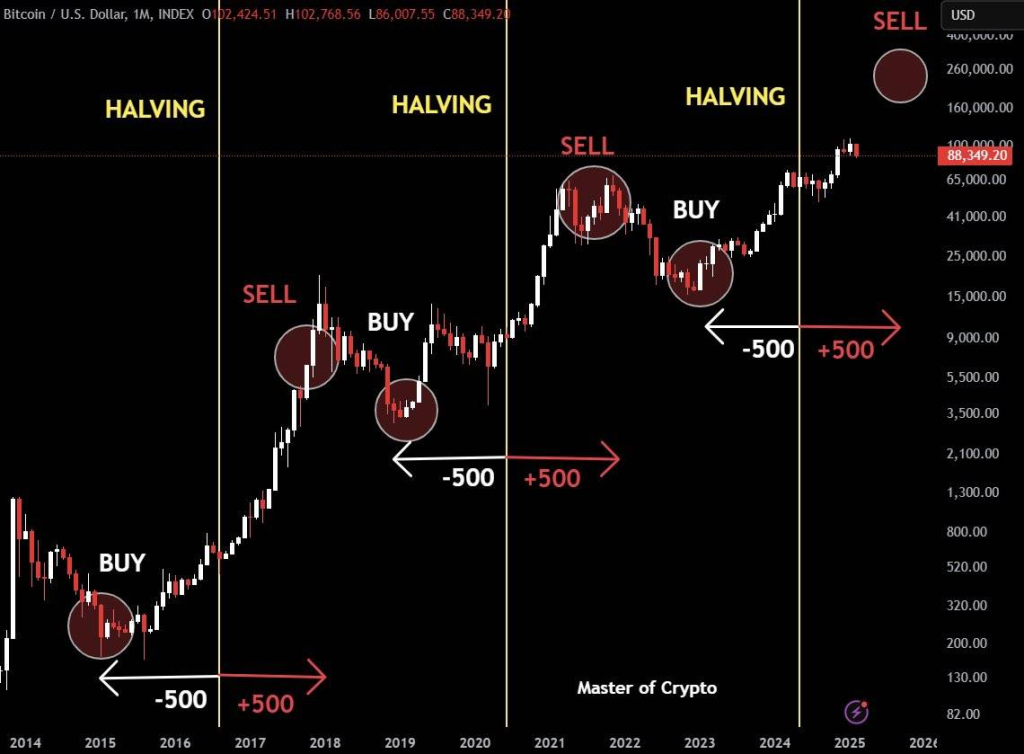
This reward system will continue until around 2140 when the proposed limit of 21 million is reached. At that point, miners will be rewarded with fees that network users will pay to process transactions. These fees ensure that miners still have an incentive to mine and keep the network running.
BTC Dominance
Bitcoin Dominance is an indicator showing Bitcoin’s dominance in the cryptocurrency market. Bitcoin Dominance is the ratio of Bitcoin’s market capitalization to the total market capitalization of the entire cryptocurrency market.
This index is calculated using the following formula: Bitcoin Dominance = BTC market capitalization / Total cryptocurrency market capitalization
Bitcoin Storage Wallets
Today, with the development of the cryptocurrency market, there are quite a few wallet applications for users to choose from to store Bitcoin, which can be summarized into 3 main types:
- Hot wallets: Bitcoin storage wallets created online where users hold the private keys. Popular hot wallets for storing Bitcoin: Blockchain.com, Coin98 Wallet, Exodus, Coinbase Wallet, etc.
- Cold wallets: cold wallets are highly secure Bitcoin storage wallets, with private keys stored in physical devices. The two most popular cold wallets currently include: Ledger and Trezor.
- Exchange wallets: these are wallets provided by exchanges to users, with this type of wallet users do not hold the private keys. Users can use wallets from popular exchanges such as: Binance, Huobi, OKX, Kucoin, Gate.io, MXC, etc.
Should You Buy Bitcoin?
Bitcoin is one of the most volatile assets. To demonstrate Bitcoin’s volatility, we can look at two examples. Around December 2017, BTC surged, reaching a peak of $19,850, then rapidly dropped to $5,000. Another case illustrating Bitcoin’s volatility was in November 2021, when this asset reached a new peak at $67,617, but just 2 months later, the price of one BTC quickly decreased by nearly 50% to around $30,000.
Bitcoin’s strong volatility makes it one of the riskiest assets for investors. Therefore, to become a successful investor in the crypto market, investors need to master basic knowledge such as: market cycles, technical analysis, etc. Without this, investing in Bitcoin can easily become a “double-edged sword” causing investors to suffer heavy losses.
What are Bitcoin Whales?
Bitcoin whales are players holding a large amount of Bitcoin, up to hundreds of thousands of BTC. These players can be anonymous millionaires or large venture capital funds in the crypto market.
Because they hold such large amounts of Bitcoin, when Bitcoin whales need to buy or sell Bitcoin, they usually have special arrangements with OTC service providers to stay under the radar of individual investors and minimize Bitcoin price volatility as much as possible.
Summary
Above are all the information you need to know about Bitcoin, the most influential factor in the cryptocurrency market. Through this article, you should now have a basic understanding of Bitcoin to make your own investment decisions.