ChatGPT is an advanced virtual assistant developed by OpenAI, functioning similarly to digital helpers like Siri or Google Assistant. It works seamlessly on smartphones and computers, offering users the ability to engage in natural, human-like conversations. So, what exactly is ChatGPT, and how does it work? Let’s explore its benefits and functionality.

What Is ChatGPT?
ChatGPT, short for Chat Generative Pre-training Transformer, is a state-of-the-art AI chatbot created by OpenAI, built on Google’s Transformer architecture. It’s designed to generate natural conversations and respond to a wide range of questions across various subjects and fields.
What sets ChatGPT apart is its ability to engage in dialogue that closely mimics human interaction. It doesn’t just provide static responses—it holds conversations in a dynamic, interactive manner, making it feel more like chatting with a person than with a machine.
To train this model, OpenAI researchers compiled an extensive dataset of human-written text from sources such as Wikipedia, encyclopedias, reputable news outlets, and other publicly available content—amounting to hundreds of millions of documents. This data was carefully filtered and refined before being used to train the AI. Through repeated exposure to this rich content, the model learned to understand context, nuance, and the layered meanings behind words and phrases.
Today, ChatGPT is recognized as one of the most sophisticated language models available. It can handle large-scale data, generate fluent and meaningful responses, and continually improve its own understanding through interaction.
How ChatGPT Works
ChatGPT is fine-tuned from GPT-3.5 (and now, GPT-4), a powerful language model built for text generation. It’s been optimized specifically for conversation through a method called Reinforcement Learning from Human Feedback (RLHF)—which helps the model better align its responses with human expectations.
It operates using large-scale infrastructure and has been trained on an enormous dataset—approximately 570GB of text and 300 billion words. Here’s a simple way to think about it:
If you ask, “How many months are in a year?” and the model gives an incorrect answer, human reviewers can correct it. These corrections help the system learn and improve over time, making future responses more accurate.
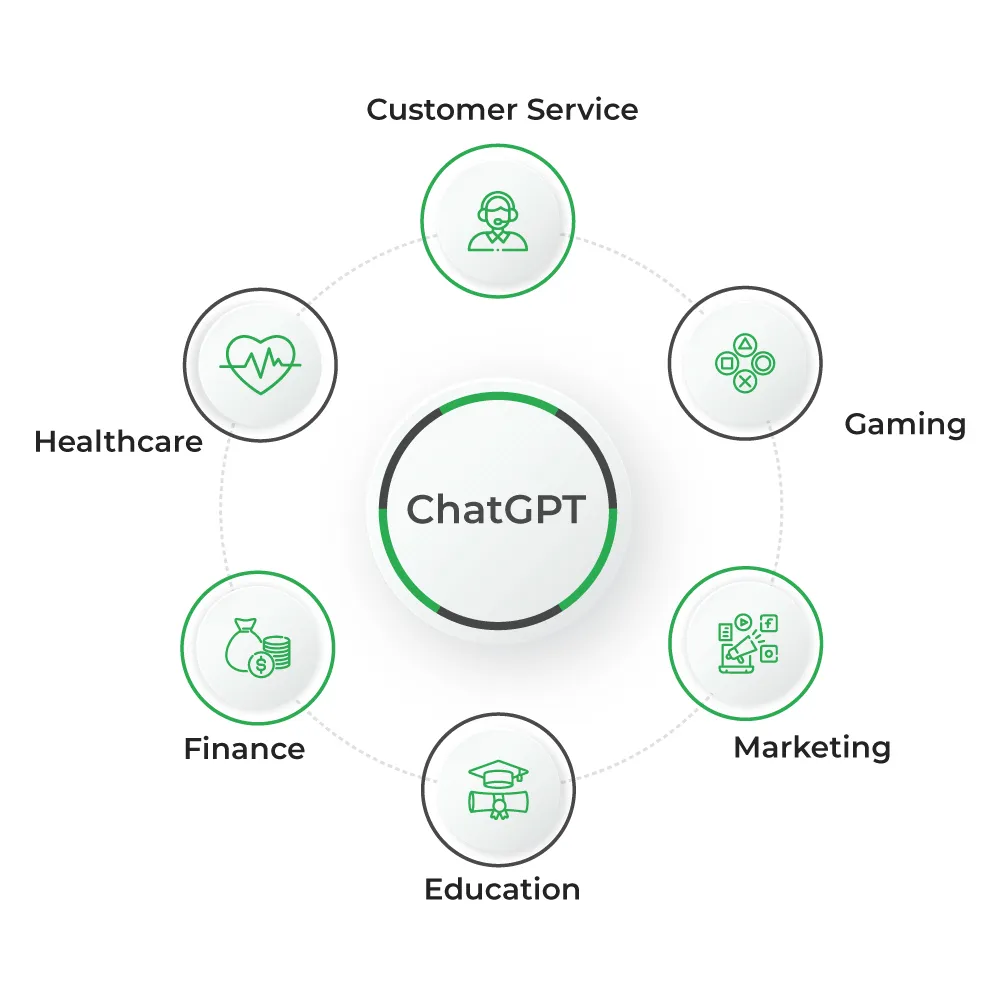
What Can ChatGPT Be Used For?
Here are some of ChatGPT’s most common and powerful applications:
- Conversational Interaction: It can engage in natural, fluid conversations, providing a personalized and intuitive experience far beyond what you get with a simple search engine.
- In-depth Answers: While Google offers quick facts, ChatGPT can dive deeper, breaking down complex topics into easy-to-understand explanations.
- Personalized Recommendations: Based on your interests, ChatGPT can suggest books, movies, or activities tailored to your preferences.
- Creative Content Generation: From writing poetry and composing music to crafting stories or designing graphics, ChatGPT supports various creative endeavors.
- Language Learning: It can help users learn new languages through interactive practice, grammar explanations, and vocabulary development.
- Translation: ChatGPT can translate between languages in real-time, helping bridge communication gaps across cultures.
- Medical Support: It can provide preliminary health insights, suggest potential causes based on symptoms, and help guide users in seeking appropriate care.
- Entertainment: Whether it’s telling jokes, offering quizzes, or suggesting games, ChatGPT serves as a source of fun and relaxation.
Where Is ChatGPT Available?
ChatGPT is accessible in most countries via websites like chatgpt.com or minitoolai.com. However, it is restricted in some regions such as China, Russia, and Iran. In those cases, users often rely on VPNs to gain access.
Key Features and Advantages of ChatGPT
- Cross-platform Compatibility: ChatGPT can be used across web, mobile, and other digital platforms.
- Multilingual Support: Trained in multiple languages, it’s useful for users around the globe.
- Versatile Knowledge Base: From history to science, economics to culture, it can address questions across virtually all fields.
- Automated Content Creation: ChatGPT can assist in writing articles, stories, or various forms of digital content.
- Customer Support: It enhances customer service by providing fast, reliable responses to inquiries.
- Workflow Automation: Businesses can automate repetitive tasks, improving efficiency and productivity.
- Data Analysis: It can help interpret statistics and analyze datasets, supporting better decision-making.
- Enhanced User Experience: Its quick, relevant responses create a more engaging and efficient user experience.
Limitations and Concerns
Despite its impressive capabilities, ChatGPT does come with some downsides:
- Security Risks: Malicious actors might exploit the technology to create harmful or deceptive software.
- Inaccuracy: While powerful, ChatGPT can still produce incorrect or misleading information.
- Distortion of Facts: Errors in training data can lead to the spread of misinformation.
- Overdependence: Relying too much on AI could stifle creativity and problem-solving in users.
- Job Displacement: Automation may threaten certain roles, particularly in writing, coding, editing, or design.
- Bias and Discrimination: Since it learns from real-world data, it can inadvertently adopt societal biases.
- Misuse Potential: ChatGPT can be used for spreading falsehoods, fake news, or scams.
- Privacy Concerns: Data used in training and interaction may pose risks to user confidentiality.
How ChatGPT Differs from Traditional Chatbots
Unlike traditional search engines like Google, Gemini, or Copilot that index web pages to provide real-time results, ChatGPT doesn’t browse the internet for answers. Instead, it relies on knowledge from its training data to generate responses—meaning it may not always be up to date or entirely accurate.
Another major difference lies in how ChatGPT understands and anticipates user needs. It’s been trained with human feedback to better interpret questions and deliver clear, helpful, and honest answers.
Final Thoughts
ChatGPT is a powerful tool that brings both opportunities and challenges. It enhances communication, supports learning, and powers creativity, but also requires careful and responsible use. As this technology continues to evolve, users and developers alike must stay mindful of its capabilities, limitations, and broader impacts.
Hopefully, this overview has given you a clearer understanding of what ChatGPT is, how it works, and how it can benefit—or impact—our everyday lives.