
ChatGPT Free Online
MiniToolAI's ChatGPT is a free AI chatbot, unlimited and no registration required. You can access ChatGPT from anywhere in the world, without any restrictions, especially in countries ChatGPT is not available (Russia, China, Hong Kong, Iran,...).
Try our Free ChatGPT API
MiniToolAI's ChatGPT is always fast and stable even in high traffic.
Introduction to ChatGPT
What is ChatGPT?
ChatGPT is an artificial intelligence (AI) chatbot that uses natural language processing to create humanlike conversational dialogue. The language model can respond to questions and compose various written content, including articles, social media posts, essays, code and emails.
ChatGPT serves as a form of generative AI, allowing users to input prompts and receive AI-generated outputs such as images, text, or videos. Its functionality resembles that of automated chat services commonly found on customer service websites, enabling users to interact with it by asking questions or seeking clarification on its responses.
The acronym "GPT" stands for "Generative Pre-trained Transformer," indicating the method through which ChatGPT processes input prompts and generates corresponding outputs. Through reinforcement learning, ChatGPT continuously refines its capabilities by incorporating human feedback and utilizing reward models to rank the quality of its responses. This iterative process of learning enhances ChatGPT's proficiency over time, contributing to its ongoing improvement in generating more accurate and contextually appropriate responses.
What is GPT-4.1-mini?
GPT-4.1-mini are OpenAI's most advanced models in the small models category. It is multimodal (accepting text or image inputs and outputting text), has higher intelligence than gpt-4o-mini ("o" for "omni") but is just as fast. It is meant to be used for smaller tasks, including vision tasks.
Currently, OpenAI has three small models, ranked from most to least capable: GPT-4.1-mini, GPT-4o-mini, GPT-4.1-nano and GPT-5-nano. GPT-5-nano is the most affordable.
What is GPT-5?
GPT-5 is the latest reasoning model from OpenAI, released in August 2025. GPT-5 is a powerful model for coding, reasoning, and agentic tasks across domains. It comes in three versions: GPT-5, GPT-5-Mini, and GPT-5-Nano.
ChatGPT Mini
ChatGPT Mini includes mini models that are low-cost and fast, optimized for everyday general tasks across all fields. You can use ChatGPT Mini at MiniToolAI. ChatGPT Mini currently includes the models gpt-4o-mini, gpt-4.1-nano, and gpt-4.1-mini.
Who created ChatGPT?
ChatGPT was developed by OpenAI, an artificial intelligence research company that introduced the tool to the public in November 2022. Established in 2015 by a consortium of entrepreneurs and researchers, including prominent figures like Elon Musk and Sam Altman, OpenAI has garnered support from various investors, with Microsoft being a prominent backer. In addition to ChatGPT, OpenAI is known for creating other innovative AI projects, such as Dall-E, an AI-powered text-to-art generator.
How does ChatGPT work?
ChatGPT operates via its Generative Pre-trained Transformer, employing specialized algorithms designed to identify patterns within sequences of data. Initially leveraging the GPT-3 large language model, which represents the third generation of Generative Pre-trained Transformer, ChatGPT utilizes a neural network machine learning architecture. This transformer draws upon extensive datasets to generate responses tailored to input prompts.
ChatGPT Plus subscribers have access to both GPT-4o, GPT-4.1 and GPT-5 with higher rate limits, offering enhanced performance for demanding tasks. GPT-5 is a reasoning model with 400,000 context window. GPT-4.1 supports an extended context window of up to 1,047,576 tokens and can generate outputs of up to 32,768 tokens — roughly equivalent to 24,000–26,000 words, depending on the language and formatting. This makes it ideal for processing long documents, analyzing complex data, and maintaining continuity across extended conversations. In contrast, GPT-4o offers a context window of up to 128,000 tokens and a maximum output of 16,384 tokens — approximately 12,000–13,000 words. Both GPT-4o and GPT-4.1 also bring multimodal capabilities, allowing users to interact with text, images, and audio within a single model. Reasoning models such as o1, o3, and o4 are also available to ChatGPT Plus users.
Employing deep learning within the framework of transformer neural networks, ChatGPT and its counterparts simulate human-like text generation. The transformer mechanism anticipates text progression, whether it's the next word, sentence, or paragraph, drawing from the learned patterns within its training data.
The training regimen commences with generalized datasets before transitioning to task-specific information. ChatGPT initially learns the nuances of human language through online text corpus, subsequently refining its conversational skills using transcribed dialogues.
Human supervisors curate conversations and assess responses, contributing to the reinforcement learning process. These evaluative models play a pivotal role in determining optimal replies. The continuous refinement of the chatbot relies on user feedback, facilitated by the provision of upvotes or downvotes through intuitive icons. Additionally, users can furnish detailed written feedback to enhance and fine-tune future interactions.
What kinds of questions can users ask ChatGPT?
ChatGPT is adept at fielding a broad spectrum of inquiries, ranging from straightforward to intricate queries. Users can pose questions spanning various domains, from philosophical ponderings like "What is the meaning of life?" to historical inquiries such as "What year did New York become a state?" Additionally, ChatGPT excels in STEM subjects, offering assistance with debugging code or generating code snippets.
While there are no constraints on the types of questions users can ask, it's essential to note that ChatGPT's knowledge is limited to data available up to the year 2021. Consequently, it lacks awareness of events and information beyond that timeframe. However, as a conversational chatbot, ChatGPT is primed to engage in iterative dialogue, allowing users to request further clarification or prompt it to refine its responses as needed.
How to add image inputs in ChatGPT?
Tap the Image icon in the prompt box, then choose a photo from your device or take one with your camera. ChatGPT supports most common image formats, such as JPEG, PNG, WEBP, and more.
Image upload limit in ChatGPT
When using ChatGPT on MiniToolAI, you can upload images without any upload limit.
How are people using ChatGPT?
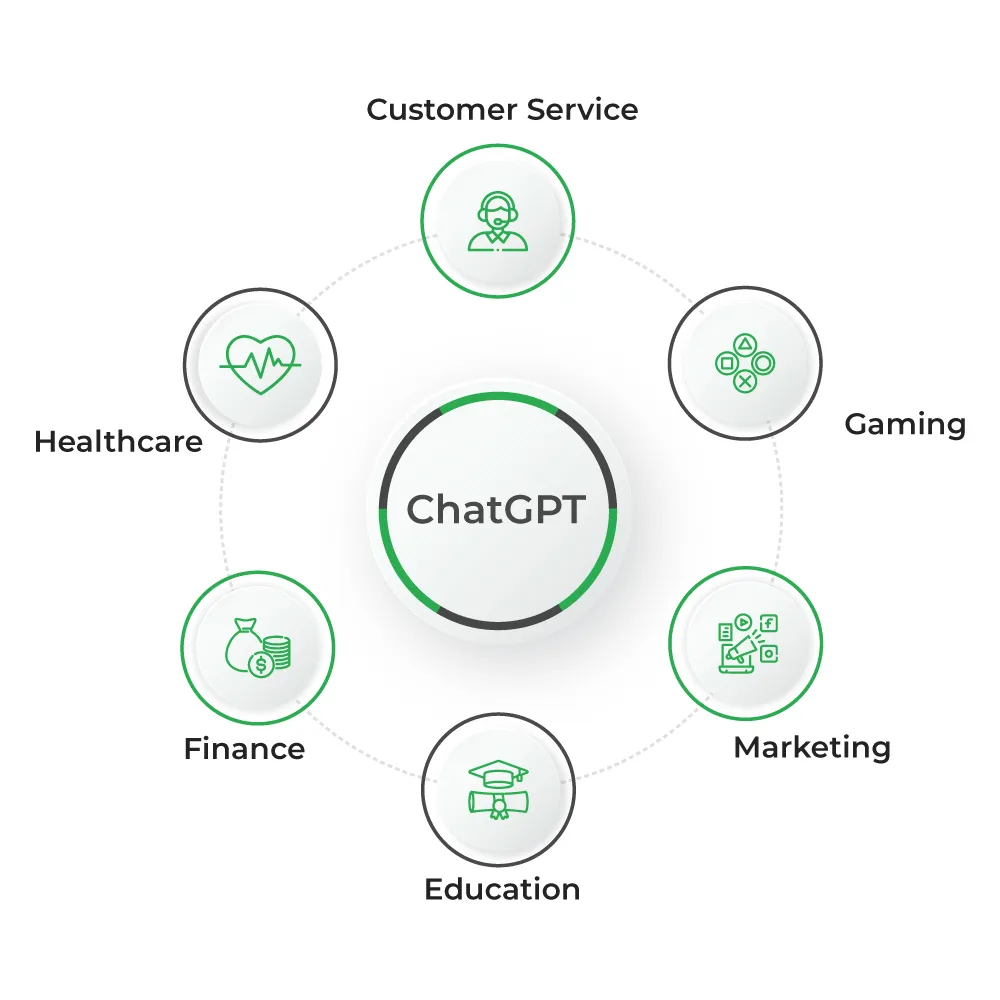
ChatGPT is versatile and can be used for more than human conversations. People have used ChatGPT to do the following:
- Code computer programs and check for bugs in code.
- Compose music.
- Draft emails.
- Summarize articles, podcasts or presentations.
- Script social media posts.
- Create titles for articles.
- Solve math problems.
- Discover keywords for search engine optimization.
- Create articles, blog posts and quizzes for websites.
- Reword existing content for a different medium, such as a presentation transcript for a blog post.
- Formulate product descriptions.
- Play games.
- Assist with job searches, including writing resumes and cover letters.
- Ask trivia questions.
- Describe complex topics more simply.
- Write video scripts.
- Research markets for products.
- Generate art.
Unlike other chatbots, ChatGPT can remember various questions to continue the conversation in a more fluid manner.
What are the benefits of ChatGPT?
Businesses and individuals alike are delving into the myriad advantages of ChatGPT as its capabilities continue to evolve. Some of these benefits encompass:
1. Streamlined Efficiency: AI-powered chatbots excel at managing repetitive tasks, thus liberating employees to concentrate on more intricate and strategic endeavors.2. Cost-effectiveness: Employing AI chatbots can prove more economical than the recruitment and training of additional staff.3. Enhanced Content Quality: ChatGPT aids writers in rectifying grammatical or contextual errors and facilitates brainstorming sessions for content creation.4. Educational Support: ChatGPT serves as a virtual tutor by furnishing explanations on complex subjects and supplying guides to users seeking clarification.5. Swift Responsiveness: Instantaneous replies from ChatGPT truncate wait times for users in need of assistance.6. Enhanced Accessibility: AI models are accessible 24/7, ensuring continuous support and aid.7. Multilingual Proficiency: ChatGPT boasts the ability to communicate in various languages and furnish translations, catering to businesses with global reach.8. Personalized Interaction: AI chatbots customize responses based on users' preferences and behaviors, rooted in prior interactions.9. Scalability: ChatGPT adeptly manages numerous users concurrently, which is advantageous for applications with high engagement rates.10. Natural Language Comprehension: ChatGPT comprehends and generates human-like text, facilitating tasks ranging from content generation to answering queries and engaging in dialogues.11. Digital Accessibility: ChatGPT and similar AI chatbots offer text-based interactions, enhancing accessibility for individuals with disabilities compared to other interfaces.
What are the limitations of ChatGPT? How accurate is it?
Some constraints of ChatGPT include:
1. Limited grasp of the intricacies of human language: ChatGPT generates responses based on input but may lack depth or true understanding, resulting in superficial replies.
2. Knowledge cutoff: ChatGPT’s responses are based on the training data of each model. GPT-4.1 and GPT-5 have a knowledge cutoff of June 2024, while GPT-4o’s training data goes up to October 2023. As a result, information about events or developments beyond these dates may be outdated or incomplete. User feedback is encouraged to help improve accuracy over time.
3. Robotic and unnatural responses: Due to its predictive nature, ChatGPT may use repetitive or generic language, requiring human review and editing for smoother, more natural-sounding text.
4. Lack of sourcing in summaries: While ChatGPT can provide information, it doesn't cite sources or offer analysis, leaving users to verify data independently.
5. Inability to grasp sarcasm and irony: ChatGPT's understanding is based on text data, making it unable to discern nuances like sarcasm or irony.
6. Difficulty in shifting focus: ChatGPT may fixate on specific aspects of a question and struggle to adapt to different topics within the same conversation, limiting its ability to provide comprehensive responses.
What are the ethical concerns associated with ChatGPT?
While ChatGPT can be helpful for some tasks, there are some ethical concerns that depend on how it is used, including bias, lack of privacy and security, and cheating in education and work.
Plagiarism and deceitful use
ChatGPT's versatile capabilities raise ethical concerns, as it can be exploited for cheating, impersonation, and disseminating misinformation. Educators are alarmed by the prospect of students utilizing ChatGPT to plagiarize or complete assignments. Notably, CNET garnered attention when it employed ChatGPT to generate articles riddled with errors.
To combat cheating and plagiarism, OpenAI introduced an AI text classifier aimed at distinguishing between human and AI-generated text. Despite this effort, the tool was withdrawn after six months due to its inadequate accuracy.
Various online platforms, such as Copyleaks and Writing.com, offer solutions to discern the likelihood of text being authored by a human or AI. OpenAI intends to introduce watermarks for longer text pieces to aid in identifying AI-generated content.
Moreover, ChatGPT's coding capabilities pose cybersecurity challenges, as threat actors may exploit it to develop malware. While updates have addressed this concern by intercepting such requests, threat actors may devise ways to circumvent OpenAI's safety measures.
Additionally, ChatGPT's ability to mimic human writing and language styles enables impersonation, allowing malicious actors to gather sensitive information or propagate misinformation while posing as trusted individuals.
Bias in training data
ChatGPT raises significant ethical concerns due to potential biases in its training data, which can manifest in its outputs. Furthermore, the model lacks comprehension of offensive or discriminatory language. To mitigate bias, rigorous review of the data is necessary, with an emphasis on incorporating diverse and representative material to ensure more accurate outcomes.
Replacing jobs and human interaction
As technology progresses, ChatGPT stands poised to automate various tasks traditionally handled by humans, spanning data entry, customer service, and translation assistance. Concerns have arisen regarding potential job displacement, underscoring the need to assess the impact of ChatGPT and AI on the workforce.
Rather than supplanting workers, ChatGPT can serve as a valuable aid in job roles and foster the emergence of new employment prospects, mitigating the risk of unemployment. Consider, for instance, how lawyers might leverage ChatGPT to condense case notes into summaries and draft legal documents, or how copywriters could utilize it to generate article outlines and brainstorm headline concepts.
Privacy issues
ChatGPT uses text based on input, so it could potentially reveal sensitive information. The model's output can also track and profile individuals by collecting information from a prompt and associating this information with the user's phone number and email. The information is then stored indefinitely.
How can you access ChatGPT?
To access ChatGPT, create an OpenAI account. Go to chat.openai.com. and then select "Sign Up" and enter an email address, or use a Google or Microsoft account to log in.
To access ChatGPT without login, go to minitoolai.com/chatGPT.
After signing up, type a prompt or question in the message box on the ChatGPT homepage. Users can then do the following:
- Enter a different prompt for a new query or ask for clarification.
- Regenerate the response.
- Share the response.
- Like or dislike the response with the thumbs-up or thumbs-down option.
- Copy the response.
What to do if ChatGPT is at capacity
When ChatGPT encounters a surge in users, it may reach its maximum capacity, particularly during peak hours like mornings or evenings, depending on the timezone.
Should you encounter capacity limits, consider accessing ChatGPT during off-peak hours or refreshing your browser. Alternatively, subscribing to ChatGPT Plus ensures uninterrupted access, even during periods of high demand.
Is ChatGPT free?
ChatGPT is available for free through OpenAI's website. Users need to register for a free OpenAI account. There is also an option to upgrade to ChatGPT Plus for access to GPT-4o and GPT-4.1, faster responses, no blackout windows and unlimited availability. ChatGPT Plus also gives priority access to new features for a subscription rate of $20 per month.
Without a subscription, there are limitations. The most notable limitation of the free version is access to ChatGPT when the program is at capacity. The Plus membership gives unlimited access to avoid capacity blackouts.
Why is ChatGPT slow?
- Due to OpenAI's ongoing maintenance and upgrades.
- Due to high traffic volume.
How to access ChatGPT when it's slow? How to fix it
First, try to refresh your browser. If not working, you can access ChatGPT faster at MiniToolAI.Com.
Frequently Asked Questions (FAQ)
Tags: chatgpt mini, chatgpt free online, openai, hongkong, iran, russia, china, unlimited chatgpt, no login needed, no registration, gpt-4o, gpt-4.1, gpt-5, US, UK, Australia, Canada, New Zealand, England, unblocked gpt